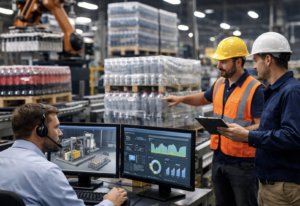
A modern pallet company does not run on lumber, nails, and forklifts alone. It runs on visibility, timing, communication, security, and dependable systems that keep every moving part connected. That is exactly why IT has become so important. For a Beverage Pallet Manufacturer, technology is no longer a back-office support function. It is part of how production stays on schedule, how inventory stays accurate, how deliveries stay organized, and how customer relationships stay strong.
The conversation around information technology has changed dramatically over the years. IT now shapes how manufacturers plan, monitor, protect, and grow their operations. Even a quick look at Reuters’ technology coverage or the enterprise insights published by CIO shows the same pattern: businesses in every sector are being pushed to think more strategically about their systems, data, and digital resilience. That shift matters in manufacturing, and it matters especially in industries where timing, volume, and reliability affect every order that leaves the yard.
IT Connects Production, Inventory, and Delivery
In pallet manufacturing, small disconnects can create expensive problems. A delay in production updates can affect inventory counts. A missed order change can create shipping confusion. An inaccurate stock record can slow down a customer who depends on consistent pallet supply to keep beverage operations moving. Good IT helps eliminate those gaps by connecting the systems and people responsible for quoting, planning, production, warehouse movement, and delivery coordination.
When those systems are integrated well, a company gains a clearer picture of what is happening in real time. Managers can see what is being built, what is ready to move, what is delayed, and what needs attention before it becomes a larger issue. That kind of visibility is not just convenient. It protects margins, strengthens service, and reduces the friction that often appears when teams rely on too many disconnected spreadsheets, emails, and manual updates. Manufacturers continue to treat smart operations and digital coordination as essential to competitiveness, not optional upgrades.
A beverage pallet operation often serves customers who expect consistency, speed, and dependable fulfillment. Those expectations become much easier to meet when IT supports production scheduling, inventory tracking, order management, and internal communication in a connected way. The stronger the system, the easier it becomes to move from reactive problem-solving to proactive planning.
Cybersecurity Protects Uptime, Revenue, and Reputation
Many manufacturers still think of cybersecurity as something that matters more to banks, hospitals, or software companies. That mindset creates risk. A pallet manufacturer may not see itself as a technology business first, but it still depends on digital systems to process orders, manage customer records, coordinate logistics, communicate with vendors, and maintain continuity across operations. If those systems are compromised, the disruption is immediate.
Ransomware and other cyber incidents can shut down business processes, delay shipments, lock up files, and interrupt communication at the worst possible time. CISA warns that ransomware incidents can severely impact business processes, and NIST provides manufacturing-specific cybersecurity resources because the sector remains a meaningful target. IBM’s 2025 Cost of a Data Breach Report also shows that breach costs remain significant, with a global average of $4.4 million.
For a beverage pallet manufacturer, that risk is not abstract. A customer waiting on pallet supply does not care whether the delay was caused by a production issue or a systems failure. They care that their operation keeps moving. That is why cybersecurity is really about uptime, reliability, and trust. It protects the company’s ability to serve customers without interruption.
This is also where staying informed matters. Following security reporting from sources like CSO Online helps leaders understand how cyber threats continue to evolve in real business environments. The companies that treat security as part of operations, not just part of IT, are usually the ones better positioned to recover, respond, and keep business moving when problems arise.
Better Data Leads to Better Decisions
Manufacturing decisions are stronger when they are based on clear, current information. IT gives leadership the ability to move beyond guesswork and gut feeling by turning operational activity into usable data. That might include production output, material usage, order trends, downtime patterns, customer demand cycles, shipping performance, or equipment reliability.
With stronger reporting, a pallet manufacturer can identify where margins are being lost, where bottlenecks keep appearing, and where improvements can make the biggest difference. That leads to smarter purchasing, sharper forecasting, better labor planning, and more disciplined production management. Deloitte’s smart manufacturing research found that manufacturers increasingly view digital capability as central to competitiveness, while technology maturity still remains uneven in areas such as workforce, maintenance, and material management.
This is one reason the broader IT conversation has become so important. Publications such as InfoWorld’s cloud computing coverage and WIRED’s business and tech reporting keep showing how infrastructure, data, and AI are changing the way organizations operate. For manufacturers, the lesson is straightforward: better data creates better judgment, and better judgment supports healthier growth.
It is also becoming clear that AI and automation are only useful when the underlying systems are organized well. CIO recently argued that AI should now be treated more like enterprise infrastructure than a side tool, which reinforces the idea that digital maturity starts with strong foundations, governed data, and reliable systems.
IT Helps Meet Customer Expectations More Consistently
Customers in the beverage space often run high-volume operations with little room for confusion. They want dependable communication, accurate counts, timely deliveries, and quick answers when needs change. IT helps manufacturers meet those expectations by supporting faster information flow across the business.
That can show up in simple but meaningful ways. Sales teams can confirm order status faster. Operations can see production priorities more clearly. Customer service can respond with confidence instead of chasing updates across multiple departments. Leadership can spot recurring issues and fix them before they affect long-term relationships. The result is a more consistent customer experience, and consistency builds trust.
Technology also helps present the company as organized, responsive, and ready for long-term partnerships. That matters because buyers are not only evaluating the product. They are evaluating reliability, responsiveness, and risk. A business that communicates clearly and operates with strong systems feels safer to depend on.
Scalable IT Makes Growth More Manageable
Growth creates pressure. More customers mean more orders, more scheduling complexity, more purchasing activity, more delivery coordination, and more data to manage. A company that grows without strong IT often finds itself buried in manual work, inconsistent processes, and communication problems that multiply over time.
Scalable IT makes growth more manageable because it creates repeatable systems. Instead of reinventing the wheel every time the business expands, the company can rely on stronger workflows, better reporting, safer data handling, and more organized internal processes. NIST emphasizes that cybersecurity and risk management frameworks give manufacturers tools for resilience and recovery, which becomes even more important as operations become more connected and more complex.
That does not mean every pallet company needs to chase every new tool. It means the business should invest in the technology that supports stability, visibility, and smart growth. The right systems help the company scale with less chaos and more confidence.
Industry reporting also reflects how quickly infrastructure decisions are changing. Coverage from The Verge’s tech section shows how fast digital tools, platforms, and expectations continue to move. For manufacturers, that is a reminder that standing still has a cost. Systems that once felt good enough can become a hidden source of delay, risk, and lost opportunity.
IT Strengthens Credibility in a Competitive Market
A beverage pallet manufacturer may compete on quality, consistency, turnaround time, logistics, and service, but credibility still plays a major role in winning and retaining business. Buyers want to know that the company they choose can deliver reliably and handle modern operational demands.
Strong IT helps support that credibility. It shows up in organized communication, dependable recordkeeping, clearer scheduling, safer customer data, stronger business continuity, and smoother coordination across departments. Those things may not always be visible on the surface, but customers feel the difference when a business is prepared instead of scattered.
This also affects how the company is perceived online and in the broader market. Businesses that demonstrate clear operations, digital maturity, and responsible systems tend to inspire more confidence. They look more stable. They feel more trustworthy. In a market where reliability matters, that perception can become a real competitive advantage.
Conclusion
IT matters for every beverage pallet manufacturer because modern manufacturing depends on more than physical output. It depends on connected systems, accurate data, cyber resilience, strong communication, and the ability to keep business moving without unnecessary friction. Technology supports the day-to-day work of production, but it also supports the larger goals of trust, efficiency, consistency, and growth.
For companies that want to serve beverage clients well, protect their operations, and build a stronger future, IT is not a side issue. It is part of the business foundation. The stronger that foundation becomes, the easier it is to operate with confidence, adapt to change, and deliver the kind of service customers remember for the right reasons.